Introduction: Email marketing, a channel that remains as powerful as ever
In a digital landscape in constant flux, where trends come and go at a frantic pace, email marketing remains the channel with the best return on investment. With an average ROI of 36 euros for every euro invested in 2026, it far outstrips social media, paid search, and even SEO in terms of direct profitability.
Yet many businesses underutilize this lever or use it ineffectively. Mass unsegmented sends, outdated designs, lack of automation: the mistakes are frequent and costly. Every poorly targeted email damages your sender reputation and reduces your chances of reaching your prospects' inboxes.
This guide was designed by the Pirabel Labs team to give you all the keys to a high-performing email marketing strategy in 2026. From building your list to optimizing your conversion rate, through automation and deliverability, you will discover the techniques that truly make the difference.
Email is the only marketing channel where you own your audience. Unlike social media whose algorithms constantly change, your email list belongs to you and no one can take it away.
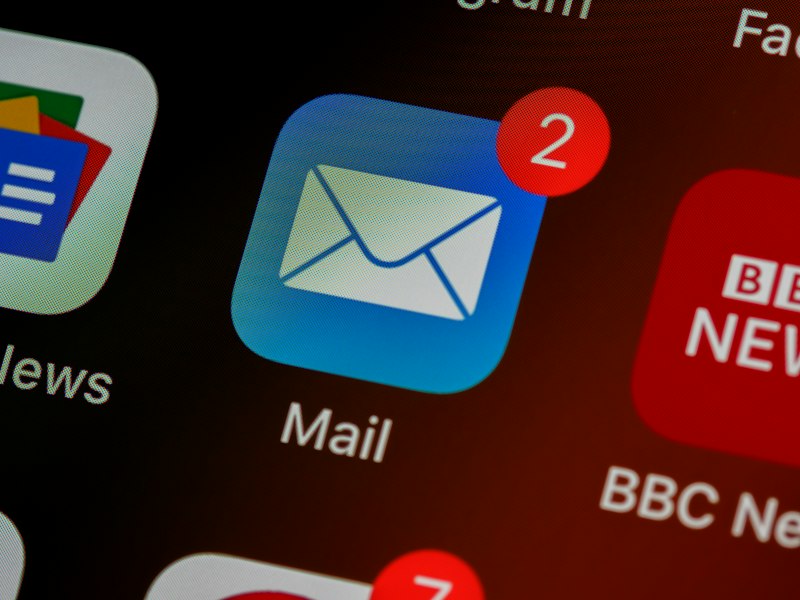
Email marketing remains the digital channel offering the best return on investment in 2026.
Building a quality email list
The quality of your email list directly determines the success of your campaigns. A list of 1,000 engaged and qualified subscribers will always generate more results than a list of 50,000 contacts purchased or collected without explicit consent.
Lead magnets that work in 2026
To encourage your visitors to share their email address, you need to offer them immediate and tangible value. Here are the highest-performing lead magnet formats this year:
- Email mini-courses: a series of 5 to 7 educational emails delivered over a week. This format creates the habit of opening your emails right from the start of the relationship.
- Templates and checklists: practical, immediately usable tools that your audience can apply to their situation.
- Calculators and interactive tools: a free audit, an ROI simulator, or a customised diagnostic that requires an email to receive the results.
- Exclusive case studies: detailed analyses of real results that demonstrate your expertise while providing value.
- Webinars and replays: exclusive video content accessible only to registered subscribers.
Optimize your capture forms
The placement, design, and wording of your forms directly impact your conversion rate. Place your forms in strategic locations: at the end of blog articles, in exit-intent pop-ups, in the sidebar, and on a dedicated landing page. Reduce the fields to the strict minimum: first name and email are enough in most cases. Each additional field reduces your conversion rate by 10 to 25%.
Segmentation: the key to high-performing campaigns
Sending the same email to your entire list is a guaranteed recipe for poor open rates and mass unsubscribes. Segmentation is the most powerful lever for improving campaign performance. Segmented emails generate on average 760% more additional revenue compared to unsegmented emails.
The essential segmentation criteria
- Behavioral: based on your contacts' actions (pages visited, emails opened, products purchased, abandoned carts).
- Demographic: age, location, industry, business size for B2B.
- By engagement: separate your active contacts (regular opens) from inactive ones to adapt your approach.
- By customer journey stage: a prospect just discovering your brand does not receive the same emails as a loyal customer of two years.
- By acquisition source: a contact who came from a webinar does not have the same expectations as a contact from a downloaded lead magnet.

Fine audience segmentation is the pillar of a profitable email marketing strategy.
Automation: work less to convert more
Email automation is the revolution that transformed email marketing from a broadcast channel into a true conversion engine. In 2026, automated sequences represent on average 30% of email-generated revenue, while requiring only a fraction of the working time of manual campaigns.
Essential automated sequences
- Welcome sequence: 3 to 5 emails sent after sign-up. This is your first impression, and it determines the future engagement level of your contact. Introduce your brand, deliver the promised value, and guide toward a first action.
- Nurturing sequence: an educational series that progressively moves your prospects through the sales funnel by providing value at each step.
- Abandoned cart sequence: for e-commerce, these emails recover on average 10 to 15% of abandoned carts. Send a first reminder after one hour, a second after 24 hours with a reassurance argument, and a third after 72 hours with a possible incentive.
- Re-engagement sequence: target contacts inactive for 90 days with a dedicated campaign to reactivate them or clean your list.
- Post-purchase sequence: thank you, review request, complementary recommendations, and loyalty program.
Choose the right automation tool
The choice of your email marketing platform is strategic. Brevo (formerly Sendinblue) has established itself as the leading French solution, with an excellent value for money, an intuitive interface, and advanced features for automation, CRM, and SMS marketing. Mailchimp remains a solid choice for smallowr structures thanks to its generous free plan and ease of use. For more mature businesses, ActiveCampaign offers automation and scoring capabilities among the most advanced on the market.
Optimizing open rate and click-through rate
The average open rate in email marketing hovers around 21% in 2026. But businesses that apply best practices regularly reach rates of 35 to 45%. The difference lies in the details of execution.
The art of the subject line
Your subject line is the number one factor determining whether your email will be opened or ignored. Here are the principles that work:
- Be specific: "3 techniques to double your sales in 30 days" always outperforms "Our marketing tips."
- Create urgency or curiosity: without resorting to clickbait, use formulations that make readers want to know more.
- Personalize: inserting the first name in the subject line increases the open rate by 10 to 14% on average.
- Test the length: subjects of 6 to 10 words generally get the best results, but this varies by audience.
- Avoid spam words: "free," "urgent," "limited offer" in capitals trigger spam filters.
Systematic A/B testing
A/B testing is the scientific method applied to email marketing. Systematically test your subject lines, send times, calls to action, visuals, and email length. Send variant A to 15% of your list, variant B to another 15%, and the winning version to the remaining 70%. Change only one variable at a time to clearly attribute results to the tested modification.

A/B testing and data analysis are essential to continuously optimize your campaigns.
Deliverability: reaching the inbox
No email marketing strategy can work if your emails do not reach the inbox. Deliverability is a major technical and strategic challownge that too many businesses neglect.
The technical fundamentals
To guarantee optimal deliverability, you need to correctly configure your email authentication protocols:
- SPF (Sender Policy Framework): allows mail servers to verify that the email genuinely comes from a server authorized by your domain.
- DKIM (DomainKeys Identified Mail): adds a cryptographic signature to your emails to guarantee their integrity.
- DMARC (Domain-based Message Authentication): defines the policy for handling emails that fail SPF and DKIM verification.
Maintaining a good sender reputation
Your sender reputation is an invisible score assigned by email providers (Gmail, Outlook, Yahoo) that determines whether your emails land in the inbox, in spam, or are blocked. To maintain it at a high level, regularly clean your list by removing invalid addresses and contacts inactive for more than six months. Keep your complaint rate below 0.1% and your bounce rate below 2%.
The best email campaign in the world is worthless if it lands in the spam folder. Investing in deliverability is not optional: it is the foundation on which everything else in your strategy rests.
Metrics to track and continuous optimization
Managing your email marketing strategy relies on rigorous tracking of your key performance indicators. Here are the KPIs to monitor continuously:
- Open rate: target at least 25%. Below that, work on your subject lines and segmentation.
- Click-through rate (CTR): a good CTR sits between 3 and 5%. Optimize your CTAs, design, and content relevance.
- Conversion rate: the percentage of recipients who complete the desired action after clicking. This is the ultimate indicator of profitability.
- Unsubscribe rate: keep it below 0.5% per send. A higher rate signals a targeting or frequency problem.
- Revenue per email: revenue generated divided by the number of emails sent. This indicator measures the overall effectiveness of your strategy.
Conclusion: time to take action
Email marketing in 2026 is a sophisticated channel that rewards businesses willing to invest in quality, personalization, and automation. The principles are clear: build a quality list, segment carefully, automate intelligently, and optimize continuously based on data.
Do not leave this high-potential channel unexploited. Every day without a structured email strategy is a day you are leaving money on the table. The Pirabel Labs team helps businesses implement high-performing email marketing strategy, from technical configuration to creating automated sequences that convert.
Contact Pirabel Labs today for a free audit of your email strategy and discover how to transform your contact list into a true growth engine.